
Your Team Doesn't Need Another Team-Building Day. It Needs a Performance Breakthrough.


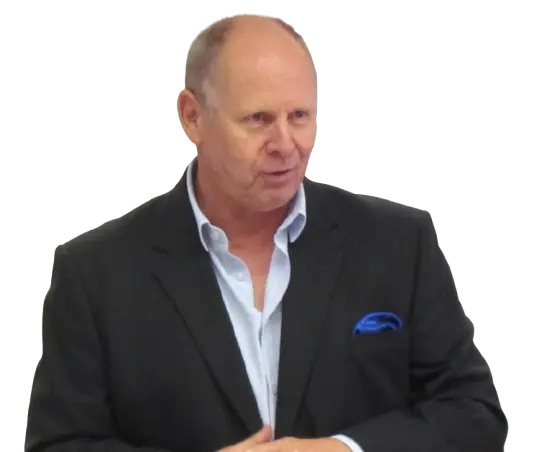
Why high-performance teams are built through leadership alignment, strong relationships, AdaptAgility and disciplined execution — not a memorable day away from the office alone.
By Tony Dovale | Founder of Life Masters | Revolutionary Workplace®
Your last team-building event might have been a tremendous success.
People laughed. Colleagues connected. The team returned to work energised, with photographs, shared memories and renewed enthusiasm.
Then Monday arrived.
The same arguments resurfaced. Departments reverted to protecting their own interests. Difficult conversations were avoided. Decisions stalled. Accountability became negotiable.
What happened?
The problem was never the team-building day itself. The problem was expecting a single experience to resolve challenges embedded in leadership, relationships, everyday behaviour and workplace culture.
A team can have a fantastic day together without becoming a high-performance team.
For CEOs, COOs, HR directors and business leaders, understanding this distinction is essential. The objective is not simply to improve how people feel about working together. It is to improve what they can accomplish together.
TL;DR: Your Team Doesn't Need Another Team-Building Day. It Needs a Performance Breakthrough.
Traditional team building can create connection and energy, but it rarely fixes the underlying causes of dysfunctional teams on its own.
Research from Crucial Learning, Gallup and Google's Project Aristotle highlights the importance of strong workplace relationships, leadership, psychological safety, clear expectations and accountability.
For South African businesses, where Gallup reported employee engagement at just 18% in 2025, improving how people work together is a serious business priority.
High-performance teams don't happen by accident. They are built deliberately.
Life Masters helps organisations move beyond team bonding to strengthen leadership alignment, trust, communication, AdaptAgility™, resilience and execution through our CLEARx® High Performance Teams framework.
The real measure of team building isn't what happens on the day. It's what your people achieve together when they return to work.
Is your team performing at its potential? Let's identify what's getting in the way and find the right path forward.
Life Masters | Optimising People, Teams, Leadership and Culture.
The evidence: relationships have a measurable connection to performance
In February 2025, Crucial Learning published findings from a survey of 800 professionals examining the relationship between interpersonal relationships and team performance.
Its analysis associated relationship factors — including feeling understood, having positive regard for colleagues and resolving interpersonal conflict quickly — with nearly half of the variation in reported team performance.
The study also found that 50% of respondents spent at least two hours per week dealing with the effects of team conflict. These are survey findings and reported associations, not proof that relationships alone cause performance outcomes. Nevertheless, they highlight an important business issue: the way people work together deserves the same serious attention as strategy and processes.
Read the Crucial Learning study: The Power of Relationships
The implications are significant. Organisations can invest in the best strategy, recruit talented people and implement sophisticated technology, yet still underperform when colleagues cannot communicate openly, manage disagreements or coordinate their efforts.
Team effectiveness is not simply about who is on the team. It is also about how the team works together.
South Africa has a compelling reason to pay attention
Gallup's State of the Global Workplace 2026 report provides a sobering local perspective. Based on data collected during 2025, it reports that just 18% of South African employees were engaged at work, compared with 20% globally.
The same report identifies declining manager engagement as a major contributor to the global engagement downturn.
Explore Gallup's South African workplace data.
Employee engagement is not the same as team effectiveness, and these figures do not establish that team-building interventions will improve engagement. They do, however, reinforce the need to examine the working environment, management capability and quality of leadership.
When people lack clarity, feel unable to speak honestly or experience inconsistent leadership, organisations should investigate the underlying conditions rather than assume that another motivational event will solve the problem.
Five reasons teams struggle to perform
1. Leadership misalignment
When senior leaders are not aligned, the consequences cascade throughout the organisation.
One executive prioritises growth, another protects costs, and a third focuses on operational efficiency. Each may have legitimate objectives, but without shared priorities, clear decisions and mutual commitment, departments pull in different directions.
Employees receive conflicting messages. Resources become contested. Execution slows.
Leadership alignment is not an optional addition to team effectiveness. It establishes the direction, priorities and behavioural standards that teams need to perform.
2. Relationships that cannot withstand disagreement
Different personalities, experiences and working styles can strengthen a team. They can also create friction when people misinterpret one another's intentions.
A decisive colleague may see a cautious colleague as obstructive. A detail-oriented professional may interpret a fast-moving colleague as careless.
The answer is not to eliminate differences or expect everyone to become friends. It is to develop the ability to understand different perspectives, challenge assumptions constructively and resolve conflict without damaging working relationships.
Curiosity, respectful communication and the willingness to discuss difficult issues are practical performance capabilities.
3. Psychological safety without accountability — or accountability without psychological safety
Effective teams need both.
Psychological safety allows people to ask questions, admit mistakes, raise concerns and challenge assumptions without unreasonable interpersonal consequences. Accountability ensures that commitments, standards and responsibilities remain clear.
Google's Project Aristotle identified five important team dynamics: psychological safety, dependability, structure and clarity, meaning, and impact.
Explore Google's team effectiveness research.
The lesson is straightforward. People need to feel able to speak honestly, understand what is expected of them, deliver on commitments and see how their work contributes to meaningful outcomes.
Safety without standards can become complacency. Standards without safety can suppress the information leaders need to make good decisions.
High-performance teams combine both.
4. Weak ownership and inconsistent execution
Agreement in a meeting is not the same as commitment to action.
Responsibilities overlap. Dependencies remain unresolved. Deadlines slip. People explain why delivery was difficult without resolving what needs to change.
High-performing teams establish clear ownership, decision rights, performance expectations and follow-through.
They ask: Who owns this? What does success look like? By when? What could prevent delivery? How will we know whether we have succeeded?
These questions turn good intentions into disciplined execution.
5. A culture that contradicts the organisation's ambitions
Culture is revealed by what leaders consistently reward, tolerate and reinforce.
An organisation cannot demand collaboration while rewarding internal competition. It cannot expect innovation while punishing every unsuccessful experiment. Nor can it build trust when leaders avoid accountability for their own behaviour.
Sustainable team performance requires alignment between the organisation's stated values and the everyday experience of its people.
The solution: move from team bonding to performance enablement
Traditional team-building activities can play a valuable role. Experiential challenges can expose behaviours, create shared experiences and provide opportunities to practise communication, decision-making and collaboration.
The difference lies in how those experiences are designed and applied.
Instead of starting with, "Which activity should we book?", begin with five more valuable questions:
- What business outcome must improve?
- What behaviours or working conditions are preventing progress?
- What do leaders and team members need to learn or practise?
- What agreements and decisions must change when everyone returns to work?
- How will we reinforce and measure progress afterwards?
This approach connects the experience to real business challenges.
A leadership team struggling with strategic alignment needs different work from a frontline team dealing with communication breakdowns. A newly formed team has different needs from an established team experiencing destructive conflict.
The intervention should fit the problem, not the other way around.
CLEARx®: connecting people capability to business results
At Life Masters, our approach to High Performance Teams connects the human dynamics of performance with the behaviours and disciplines required to deliver results.
Our CLEARx® framework provides a practical foundation for this work:
- CONNECT: Build meaningful working relationships, shared understanding and the connection required for collaboration.
- SPEAK: Strengthen honest communication, constructive dialogue and the ability to raise difficult issues.
- CHALLENGE: Question assumptions, confront unhelpful patterns and address the issues that constrain performance.
- LEARN: Turn experience, feedback and setbacks into insight, improved capability and AdaptAgility™.
- DELIVER: Translate clarity and commitment into ownership, execution and measurable outcomes.
The x represents Zero-gap Execution: closing the gap between what people know, what they commit to and what they actually do.
The framework is most valuable when it is connected to the team's real operating environment — its priorities, relationships, decisions, responsibilities and performance expectations.
This is the difference between a team-building event that people remember and a performance intervention that changes how people work.
AdaptAgility: perform effectively when conditions change
Today's teams face constant disruption from shifting markets, changing customer expectations, new technologies and increasing complexity.
The arrival of AI adds another dimension. Teams must learn how to combine human judgement, creativity, relationships and accountability with the capabilities of increasingly powerful digital tools.
Microsoft's 2025 Work Trend Index describes the emergence of human-agent teams and the need to rethink how work is organised. Technology adoption alone is not enough; leaders must also consider how people adapt their roles, collaborate and make decisions.
Explore Microsoft's 2025 Work Trend Index.
This is where AdaptAgility™ becomes especially relevant.
Teams need the capacity to learn quickly, challenge outdated assumptions, respond constructively to uncertainty and maintain purposeful action under pressure.
AdaptAgility is not change for its own sake. It is the ability to adapt intelligently while remaining focused on meaningful outcomes.
The business case: invest in the conditions that make performance possible
A separate 2025 Crucial Learning study involving 966 professionals examined four cultural competencies: high-performance habits, productive relationships, healthy communication and influential leadership.
The researchers reported that, together, these competencies accounted for 43% of the statistical variance in organisational ability to execute and innovate.
Read the Crucial Learning research on performance predictors.
This is an association, not a guaranteed return on investment. But it supports an important principle: organisational performance is influenced by the combination of leadership, relationships, communication and everyday working habits.
For business leaders, the opportunity is to identify which of these conditions need attention and invest accordingly.
Imagine a leadership team that can challenge one another honestly, resolve disagreements quickly and commit to shared priorities.
Imagine managers who work across departmental boundaries instead of reinforcing silos.
Imagine employees who understand expectations, contribute ideas and take responsibility for delivering on commitments.
These are the conditions that help organisations translate people capability into performance.
Your next team-building investment should start with a better question
Before booking another corporate team-building event, ask yourself:
Are we looking for a memorable experience, or are we serious about improving how our people perform together?
Both experiences and performance matter. The opportunity is to connect them.
At Life Masters, we work with organisations in Johannesburg, Gauteng and across South Africa to strengthen High Performance Teams, leadership alignment, AdaptAgility, resilience and workplace culture through our Revolutionary Workplace® Human Performance Architecture™.
Depending on the challenge, the right intervention may be an experiential team effectiveness programme, a leadership alignment process, a facilitated executive simulation or a broader performance enablement engagement.
The starting point is understanding the real problem before prescribing the solution.
If your team is experiencing recurring conflict, silo behaviour, poor communication, leadership misalignment or inconsistent execution, let's identify what is getting in the way.
Request a team performance conversation with Tony Dovale and Life Masters to explore the barriers affecting your team's effectiveness and determine the right next step.
Because the ultimate measure of team building is not what happens on the day.
It is what your people can achieve together when they return to work.
Tony Dovale is the founder of Life Masters and creator of the Revolutionary Workplace® Human Performance Architecture™, CLEARx® and AdaptAgility™ frameworks. Life Masters helps organisations optimise People, Teams, Leadership and Culture to enable sustainable workplace performance.
v2026.10.12aAD
About the Author
Tony Dovale
Human Performance Architect™ | Founder & CEO, Life Masters
Tony Dovale helps organisations optimise People, Teams, Leadership and Culture through the Revolutionary Workplace® Human Performance Architecture™, CLEARx® and AdaptAgility™.
Read Tony's full biography →
Building-Revolutionary-Human-First-Workplaces
Why-Psychological-Safety-matters-in-teams
Team-Spirit-and-Team-Collaboration
Best-Corporate-Team-Building-Companies-in-South-Africa
-- South Africa's #1 High-Performance Team Building Specialists -- Best Corporate Team Building Companies in South Africa -2026 Guide. South African companies increasingly recognise that high-performance teams are the foundation of business success But not all...
As-Featured-In-Media
Tony Dovale Speaker - As featured in Media- EIN Presswire https://www.einpresswire.com/article/890716749/life-masters-launches-revolutionary-formula-won-high-performance-leadership-experience-in-south-africa Australian Securities Exchange News Today...
Executive-Summary-Orange
People Performance Intelligence™ Executive Diagnostic People Performance Intelligence™- Orange Score Executive Insight Summary Your diagnostic suggests moderate performance drag may be present. This does not indicate dysfunction. It indicates friction. WHAT YOUR...
Get In Touch
Contact Tony Dovale on 083-447-6300 to book your REVOLUTIONARY WORKPLACE High Performance Teams People Performance Enablement experience in gauteng South Africa